5 Questions to Ask Before Hiring a Structural Engineer
Every licensed structural engineer in California can stamp a set of plans. The PE license is the baseline qualification — it means the engineer passed the exams and meets the state's requirements for education and experience. But the license alone does not tell you anything about response time, drawing quality, jurisdiction knowledge, or availability during construction. Those factors determine whether your project runs smoothly or gets stuck.
After working with homeowners and GCs across Orange County and LA County, these are the five questions that most reliably separate good structural engineers from mediocre ones. Ask these before you hire anyone.
Question 1: Will I Work Directly with the PE Who Stamps the Plans?
This is the most important question and the one most homeowners forget to ask.
At many structural engineering firms, your primary contact is a project manager, an assistant, or a junior engineer. The licensed PE reviews the work and stamps the plans, but you never actually speak with them. Your questions are relayed through intermediaries. Your concerns are filtered before they reach the person making the engineering decisions.
This matters because the PE who stamps the plans has the deepest understanding of your structural design. When a question comes up during construction — and it will — you want the person who made the design decisions to be the one answering. Not someone reading from notes.
Ask directly: will the PE who stamps my plans be the person I communicate with throughout the project? Will they be available during construction when my GC has a question?
Question 2: What Is Your Typical Response Time?
Response time is the single best predictor of how a structural engineer will perform during your project. If the engineer takes 3 to 5 days to return your initial call, they will take 3 to 5 days to respond to your GC's RFI during framing. That delay costs real money — a framing crew sitting idle waiting for an engineering answer is burning through your budget.
Ask for a specific commitment: what is your typical response time for calls and emails? When should I expect to hear back if I reach out on a weekday morning?
The answer you want is same business day. Not "within 48 hours." Not "usually within a couple of days." Same business day means the engineer has systems in place to manage their workload and prioritize communication. It means your project will not stall because the engineer is unreachable.
Question 3: How Detailed Are Your Drawings?
This question reveals more about the quality of the engineering engagement than almost anything else. Structural drawings exist to communicate the design to two audiences: the plan checker and the contractor. If the drawings are too vague for either audience, problems follow.
For the plan checker, vague drawings generate corrections. Missing connection details, unspecified hardware, incomplete nailing schedules, and unclear framing plans all trigger comments that add weeks to the permit timeline.
For the contractor, vague drawings generate RFIs (requests for information). Every time your framing crew stops work to ask the engineer for clarification, that is a construction delay. If the engineer is slow to respond (see Question 2), the delay compounds.
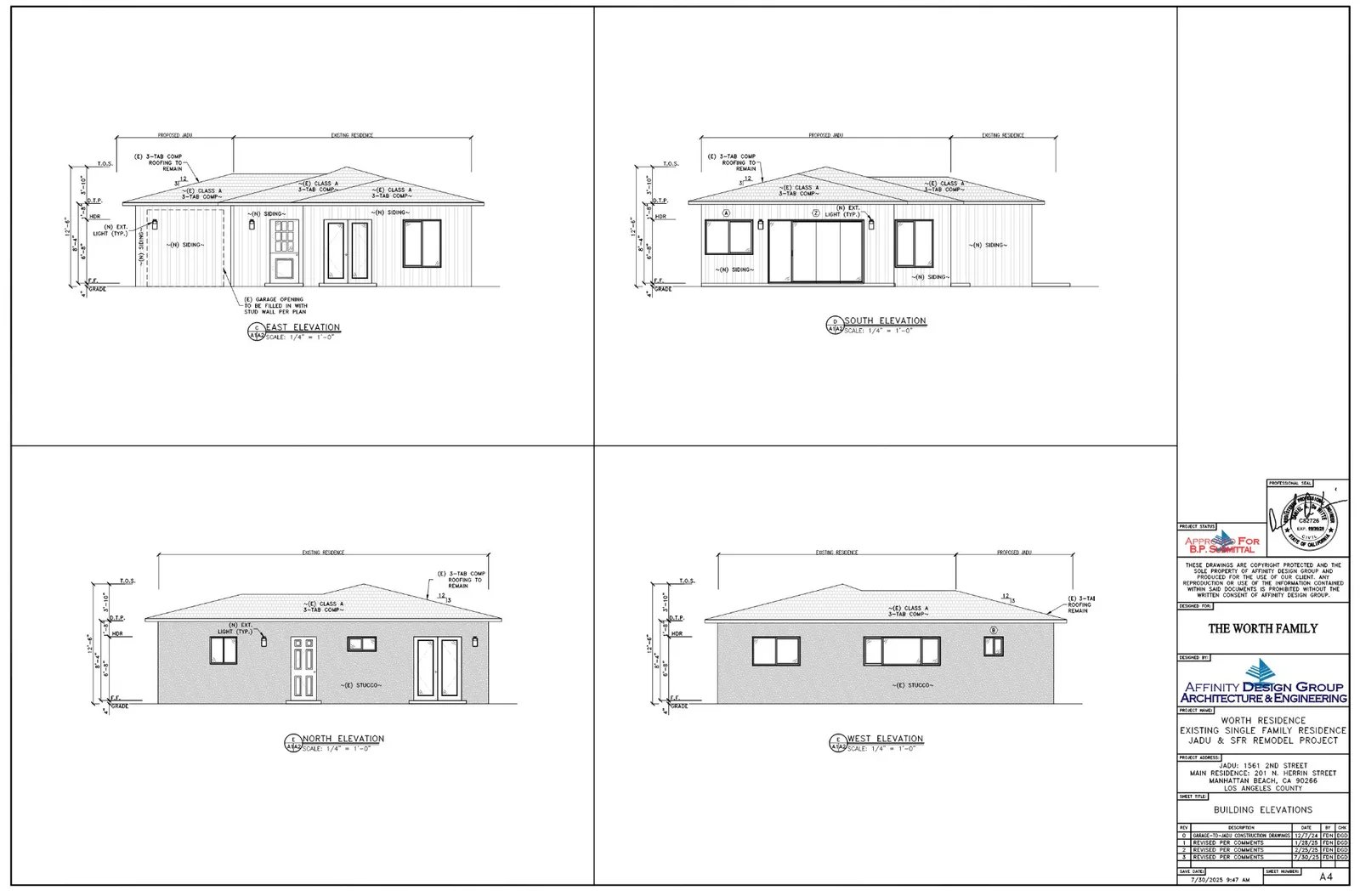
The best structural drawings are detailed enough that the framing crew can build from them without a single phone call to the engineer. Every beam is sized. Every header is scheduled. Every connection shows the specific hardware and fastener pattern. Every shear wall shows its nailing schedule and hold-down specification.
Ask the engineer: can I see a sample plan set from a similar project? Then evaluate the drawings yourself — or ask your GC to evaluate them. A good GC can tell in 30 seconds whether a set of structural plans is detailed enough to build from.
Question 4: Do You Review Against My City's Plan Check Standards?
This question separates local engineers with jurisdiction knowledge from firms that submit the same generic plan set everywhere. Every city in Orange County has specific plan check preferences, formatting requirements, and code interpretation tendencies. An engineer who knows these nuances addresses them before submission. An engineer who does not know them finds out when the correction letter arrives 4 to 6 weeks later.
Examples of jurisdiction-specific knowledge include: some cities require calculations to be organized in a specific format. Some plan checkers want to see specific code sections referenced on the drawings rather than just in the calculation package. Some jurisdictions have local amendments that add requirements beyond the base California Building Code. Some cities have known preferences about how shear wall schedules or connection details should be presented.
An engineer who has submitted 50 plan sets to your city knows these preferences. An engineer submitting to your city for the first time does not.
Ask: how many projects have you submitted to my city's building department? What are the most common correction triggers they flag?
Question 5: Are You Available During Construction?
Many homeowners and even some GCs assume the structural engineer's job ends when the plans are stamped and the permit is issued. It does not. During construction, field conditions regularly differ from what was assumed during design. Soil conditions may be different from expectations. Existing framing may not match the original plans. The inspector may have questions about the structural design that only the PE can answer.
If your engineer is unavailable during construction, your GC is forced to make structural judgment calls that should be made by a licensed professional. This creates liability for the GC, risk for the homeowner, and potential code violations that may not surface until the next inspection — or the next earthquake.
Ask: is construction-phase support included in your fee, or is it an additional charge? How quickly do you respond to RFIs during construction? Will you come to the site if field conditions require a structural evaluation?
Red Flags to Watch For
Beyond the five questions, watch for these warning signs during your initial conversations with a structural engineer.
They quote without asking about your project. A legitimate engineer cannot provide an accurate quote without understanding the scope. If someone gives you a price before asking what you are building, where, and what the site conditions are, the quote is not based on your project.
They cannot provide a sample plan set. Any established engineer should be able to show you an example of their work (with client identifying information removed). If they cannot, the quality of their drawings is an unknown.
They are evasive about response time. If the engineer will not commit to a specific response time, assume the response time is "whenever they get to it."
They do not ask about your city or jurisdiction. An engineer who does not ask where your project is located is not reviewing against jurisdiction-specific standards — because they are not aware that different cities have different requirements.
How Affinity Answers These Questions
At Affinity Design Group, the answers are straightforward. Will you work directly with the PE? Yes — Daniel De Witte, P.E. #82726, from first call through final inspection. What is your response time? Same business day, every time. How detailed are your drawings? Detailed enough that your framing crew builds without field calls. Do you review against my city's standards? Yes — every drawing set is reviewed against your specific jurisdiction before submission. Are you available during construction? Yes — construction support is included at every price point.
Whether you need help with an ADU, garage conversion, room addition, load-bearing wall removal, structural inspection, commercial project, or seismic retrofit — the same five questions apply.
Ready to Hire the Right Engineer?
Call (714) 215-7413 or submit a quick form. Same-day scope and firm quote for every project.