ADU Permit Process in Orange County — A Step-by-Step Guide for 2026
Getting an ADU permitted in Orange County involves multiple steps, multiple professionals, and multiple city departments. The process can feel overwhelming if you have never done it before. But it follows a predictable sequence, and understanding each step before you start will save you time, money, and significant frustration.
This guide walks through the entire ADU permit process in Orange County — from confirming your property qualifies through construction and final inspection. It covers what you need at each step, what it costs, how long it takes, and where projects most commonly get delayed.
Step 1: Confirm Your Property Qualifies
Before spending any money on design or engineering, confirm that your property is eligible for an ADU under your city's zoning code.
California state law (AB 68, SB 13, AB 881, and subsequent updates) requires most cities to allow at least one ADU on any single-family residential lot. However, local jurisdictions can impose additional requirements around lot coverage maximums, setback requirements (typically 4 feet for rear and side yards on detached ADUs), height limits (typically 16 feet for detached, though some cities allow more), parking replacement requirements (many cities have eliminated these for ADUs within half a mile of transit), and owner-occupancy requirements (some cities require the property owner to live in either the primary dwelling or the ADU).
You can check your city's ADU requirements by visiting the building department's website, calling the planning counter, or submitting a pre-application inquiry. This step is free and takes a few days at most. Do not skip it — discovering a zoning conflict after you have already paid for design and engineering is expensive.
Cities with Active ADU Programs in Orange County
Most Orange County cities have streamlined their ADU permit process in response to state housing legislation. Irvine, Anaheim, Fullerton, Santa Ana, Orange, and Mission Viejo all have active ADU permit pipelines. Processing times and specific requirements vary by city — this is where jurisdiction-specific knowledge from your design and engineering team matters.
Step 2: Choose Your ADU Type
There are four main ADU types, and the one you choose affects your engineering scope, construction cost, and permit timeline.
Garage Conversion
Converting an existing garage into livable space. This is typically the fastest and least expensive option because the structure already exists. The structural engineer evaluates the existing slab, designs framing modifications, and ensures seismic compliance. Structural engineering cost: $1,200 to $2,500. Timeline: 5 to 10 business days for structural plans.
Attached ADU
A new unit that shares at least one wall with the existing house. This requires new foundation, framing, and lateral system design for the new portion, plus analysis of the connection to the existing structure. Structural engineering cost: $2,500 to $4,500. Timeline: 2 to 3 weeks.
Detached ADU
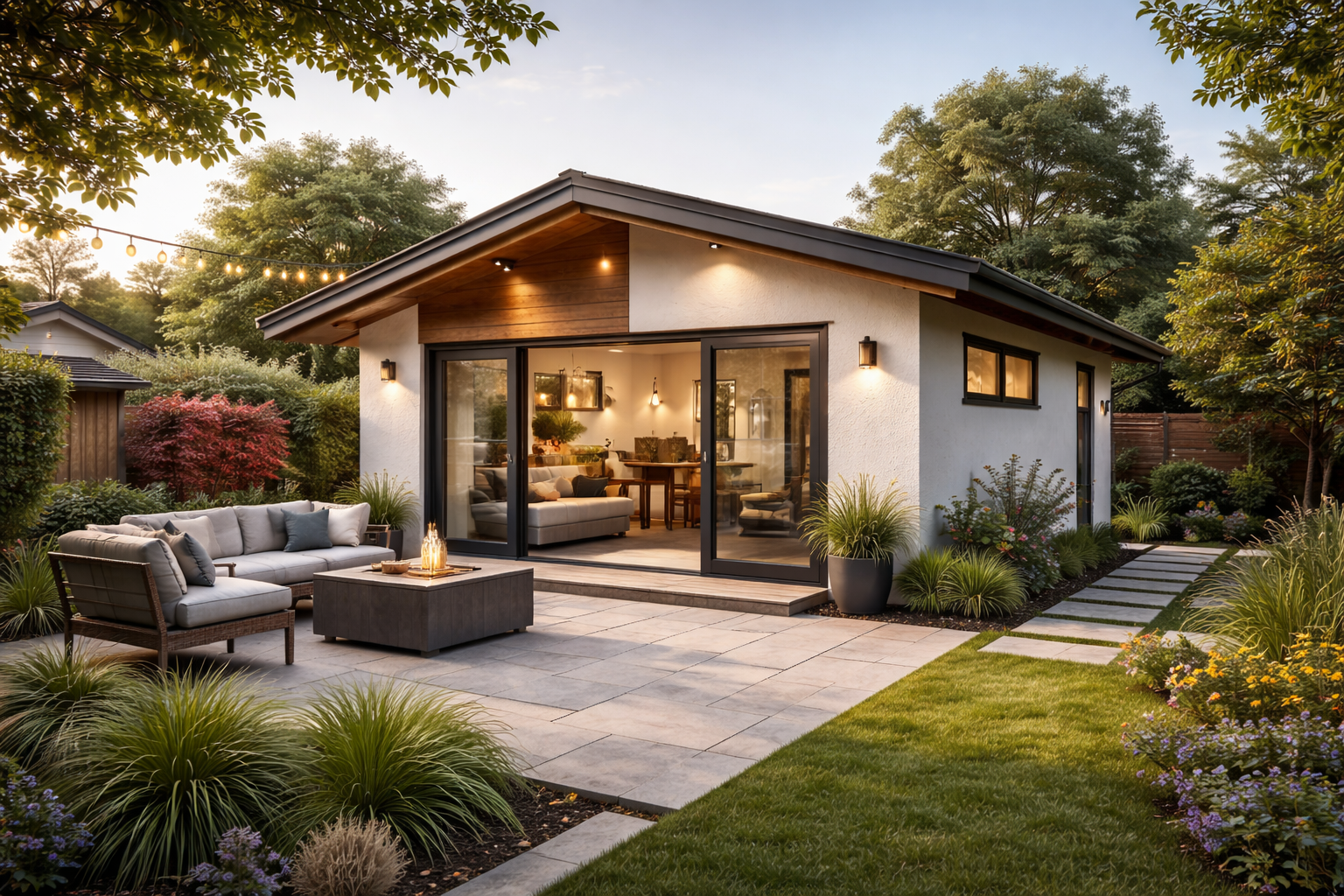
A completely separate new structure on the same lot. This requires full structural design from the ground up — foundation, framing, roof, and complete lateral system. Detached ADUs offer the most design flexibility and typically the highest rental income. Structural engineering cost: $2,500 to $6,000. Timeline: 2 to 3 weeks.
Junior ADU (JADU)
A unit of 500 square feet or less created within the existing walls of the primary dwelling. JADUs are the simplest and cheapest to build but offer the least space. Structural engineering is only required if load-bearing walls are modified. Structural engineering cost: $1,200 to $2,000 if structural work is needed.
Step 3: Assemble Your Design and Engineering Team
A permitted ADU requires several sets of professional drawings. At minimum, you will need architectural plans showing the floor plan, elevations, site plan, and Title 24 energy compliance, and structural engineering plans showing the foundation design, framing system, lateral system, and PE-stamped calculations.
Depending on your city and project scope, you may also need MEP (mechanical, electrical, plumbing) engineering, a soils report if the city requires one for new foundations, and a title 24 energy report prepared by a certified energy consultant.
The key decision at this stage is whether to hire these professionals separately or work with a single firm that handles multiple disciplines. Hiring separately gives you more control but requires you to manage coordination between firms. Working with a firm that handles architecture, structural, and MEP under one roof eliminates coordination gaps — the most common source of plan check corrections.
Step 4: Design and Engineering
Once your team is assembled, the design and engineering work begins.
Architectural Design
The architect creates the floor plan, exterior elevations, and site plan. This defines the size, layout, and appearance of your ADU. The architectural plans also address zoning compliance — setbacks, lot coverage, height limits, and parking.
Structural Engineering
The structural engineer takes the architectural design and engineers the structure to support it. For a new-construction ADU, this includes foundation design based on soil conditions and building loads, wall framing including stud sizes, spacing, and top plate connections, roof framing including rafter or truss design, beam sizing, and header schedules, lateral force-resisting system including shear wall layout, hold-downs, and anchor bolts, connection details between all structural elements, and a complete structural calculation package covering gravity, seismic, and wind loads per CBC and ASCE 7.
The structural engineer also reviews the drawings against your specific city's plan check standards before submission. This pre-submission review is what separates first-round approvals from multi-round correction cycles.
Step 5: Compile and Submit the Plan Set
The complete plan set is compiled and submitted to your city's building department. A typical ADU submission includes architectural plans (floor plan, elevations, site plan, door and window schedules), structural plans and calculations (PE-stamped), Title 24 energy compliance documentation, and any additional reports required by the city (soils, grading, etc.).
Some cities accept digital submissions; others require physical plan sets. Some cities have an over-the-counter review for simple ADUs (particularly garage conversions under a certain size); others require formal plan check submission. Your engineer or architect should know your city's specific submission requirements.
Step 6: Plan Check Review
The building department reviews your submitted plans for code compliance. This is called plan check. A plan checker — or multiple plan checkers for different disciplines — reviews the structural, architectural, and energy portions of your plan set.
How Long Plan Check Takes
In most Orange County cities, plan check for an ADU takes 3 to 6 weeks. Some cities are faster — Anaheim and Santa Ana have been processing relatively quickly in recent months. Others take longer, particularly unincorporated areas or cities with smaller building department staffs.
The single biggest factor in plan check speed is drawing quality. Plans that are complete, code-compliant, clearly detailed, and formatted to the jurisdiction's standards get approved faster. Plans that are vague, incomplete, or not formatted correctly come back with correction letters — and each correction cycle adds another 3 to 6 weeks.
Plan Check Corrections
If the plan checker finds issues, they issue a correction letter listing the items that need to be addressed. Common structural corrections include missing or incomplete seismic calculations, insufficient lateral system design, unclear connection details, and code reference errors.
At Affinity, plan check correction responses are turned around within 48 hours. If corrections result from an error on our part, revisions are made at no additional charge.
Step 7: Permit Issuance
Once the building department approves your plans, the permit is issued. You pay the permit fees (which vary by city and project size — typically $3,000 to $15,000 for an ADU in Orange County including all impact fees) and receive your approved plan set with the permit attached.
At this point, construction can begin.
Step 8: Construction and Inspections
During construction, the building department conducts inspections at key milestones. Typical inspection points include foundation inspection before concrete is poured, framing inspection after the structure is framed but before drywall, rough mechanical, electrical, and plumbing inspections, insulation inspection, and final inspection before occupancy.
Your structural engineer should remain available during construction for RFIs (requests for information) from the contractor, field questions when actual conditions differ from the drawings, structural clarifications if the inspector has questions, and site visits if field verification is needed.
This construction-phase availability is what separates a complete engineering engagement from a stamp-and-disappear operation. At Affinity, construction support is included at every price point — it is not an upsell.
Common Reasons ADU Projects Get Delayed
After engineering dozens of ADU projects across Orange County and LA County, these are the most common delay patterns.
Incomplete plan submissions where required documents are missing. The city will not begin review until the submission is complete. Coordination failures between separately-hired architects and structural engineers. If the drawings from the two firms do not align, corrections are guaranteed. Generic plan sets not tailored to the jurisdiction. Every city has specific plan check preferences — a generic plan set will get corrections in most cities. Late engagement of the structural engineer. If the structural engineer is brought in after the architect finalizes the design, structural requirements may conflict with the architectural intent, requiring redesign. Slow correction responses. Every day your engineer takes to respond to plan check corrections is a day added to your permit timeline.
Total Cost and Timeline Summary
For a typical ADU project in Orange County, expect design and engineering to take 4 to 8 weeks (architectural design plus structural engineering running concurrently), plan check review to take 3 to 6 weeks, correction responses (if needed) to take 1 to 3 weeks per cycle, and permit issuance to happen within days of plan check approval.
Total professional fees for design and engineering range from $3,000 to $12,000 depending on ADU type and scope. Permit fees range from $3,000 to $15,000. Construction costs range from $100,000 to $300,000 or more depending on size, finish level, and site conditions.
Ready to Start Your ADU?
Call (714) 215-7413 or submit a quick form. We will scope your ADU project, tell you exactly what you need, and have a firm quote to you within 24 hours.