Yes — You Need a Structural Engineer to Remove a Load-Bearing Wall
Removing a load-bearing wall without a licensed structural engineer is one of the most dangerous shortcuts in residential construction. A load-bearing wall carries the weight of the structure above it — the roof, the ceiling joists, an upper floor, or some combination. Remove it without a properly engineered replacement, and the structure will sag, crack, or fail.
California building departments require PE-stamped structural plans before issuing a permit for any load-bearing wall removal. This is not a bureaucratic formality — it is a safety requirement. The engineering determines whether the removal is safe, what beam and column system replaces the wall, and how those new elements connect to the existing structure and foundation.
This guide covers how to tell if a wall is load-bearing, what the structural engineer does, what it costs, how the permit process works, and how to avoid the mistakes that cause project delays and safety hazards.
How to Tell If a Wall Is Load-Bearing
Not every interior wall carries structural loads. Partition walls simply divide space — they can be removed without structural engineering. Load-bearing walls transfer weight from above to the foundation below. Removing them without a replacement system creates a structural gap.
There are several indicators that suggest a wall may be load-bearing. Walls that run perpendicular to the floor joists or ceiling joists above are likely carrying loads from those members. Walls that are stacked directly above or below other walls on different floors are usually part of a continuous load path. Walls in the center of the house that run the length of the building are often primary load-bearing walls supporting the roof ridge or ceiling joists from both sides.
However, you should never make a final determination yourself. Even experienced contractors sometimes misidentify walls. The structural engineer reviews the framing plan, analyzes the load paths, and provides a definitive answer. If the wall is load-bearing, the engineer designs the replacement. If it is not, the engineer can confirm that in writing so you proceed with confidence.
What Does a Structural Engineer Do for a Wall Removal?
The engineering scope for a load-bearing wall removal involves several connected steps.
Load Analysis
The engineer calculates the total load the wall currently carries. This includes dead loads (the weight of the structure itself — framing, sheathing, roofing, finishes), live loads (people, furniture, storage on floors above), and any applicable seismic or wind loads that the wall resists as part of the lateral system.
The load analysis determines the total force that must be transferred from the structure above, through the new beam, into the columns, and down to the foundation. Every number in the subsequent design flows from this analysis.
Beam Design
Once the loads are known, the engineer sizes the replacement beam. The beam spans the opening where the wall was removed and carries all the loads the wall previously supported. Beam material options include steel (W-shapes or HSS sections), laminated veneer lumber (LVL), glulam, or parallam (PSL). The choice depends on the load magnitude, the span length, the available depth for the beam, and aesthetic preferences.
Steel beams handle the highest loads and longest spans but are heavier and may require fireproofing. Engineered wood beams like LVL are common in residential applications because they are lighter, easier to install, and do not require fireproofing in most single-family applications.
The engineer specifies the exact beam size, material, grade, and any camber requirements. There is no guessing or field-sizing — the beam design is calculated to handle the specific loads with appropriate safety factors per the California Building Code.
Column and Post Design
The beam transfers loads to columns at each end (and sometimes at intermediate points for very long spans). The engineer designs these columns including the material (wood post, steel column, or concealed steel within a wood-framed wall), the cross-section size, the connection to the beam above, and the connection to the foundation below.
Column-to-foundation connections are critical. If the existing foundation does not have a footing pad directly below the column location, the engineer may need to design a new concrete pad or specify a steel base plate that spreads the load across a sufficient area of the existing slab or footing.
Lateral System Evaluation
Load-bearing walls often also function as shear walls — meaning they resist lateral forces from earthquakes and wind in addition to carrying gravity loads. When you remove a wall that is part of the lateral system, you must replace that lateral resistance elsewhere in the building.
The engineer evaluates whether the wall being removed is part of the lateral force-resisting system. If it is, the engineer redesigns the lateral system to compensate — typically by adding or strengthening shear walls in adjacent locations. This is the part of wall removal engineering that is most frequently overlooked by inexperienced engineers, and it is the part most likely to cause plan check corrections or inspection failures.
Connection Details
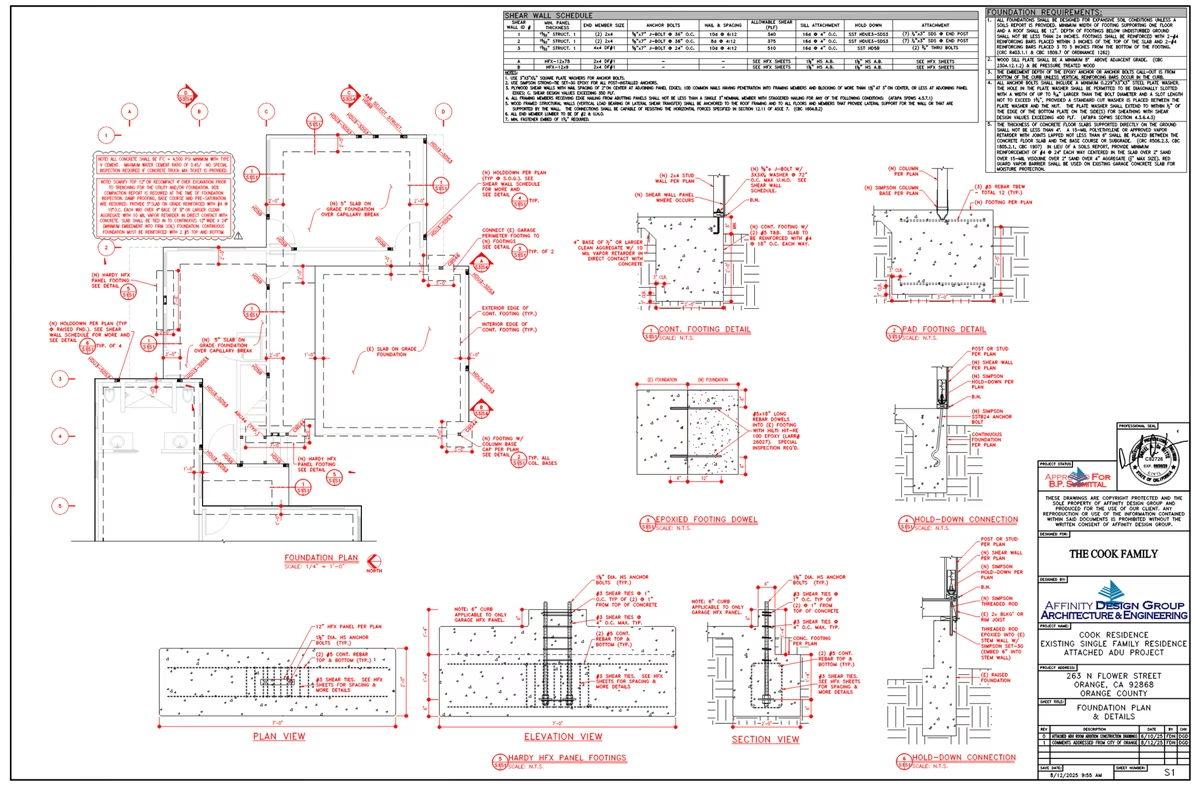
The engineer designs all connections: beam-to-column, column-to-foundation, beam-to-existing framing, and any new hardware (joist hangers, post bases, beam seats, hold-downs). These details are drawn and specified on the PE-stamped plans so the contractor knows exactly what hardware to install and how to attach each element.
PE-Stamped Drawings and Calculations
The final deliverable is a PE-stamped drawing set and structural calculation package. The drawings show the beam size, material, and location, column sizes and locations, all connection details with hardware specifications, foundation modifications if required, and any lateral system changes. The calculation package shows the load analysis, beam design, column design, and connection design with code references.
What Does Load-Bearing Wall Removal Engineering Cost?
In Orange County, structural engineering for a load-bearing wall removal typically costs between $1,200 and $3,500.
A single wall removal with a moderate span in a single-story wood-frame house is on the lower end. Multiple wall removals, long spans requiring steel beams, second-floor wall removals (which require analyzing the load path through two floors), or walls that are part of the lateral system push the fee higher.
Foundation modifications also increase the scope and cost. If the existing foundation does not have footings at the column locations, the engineer must design new pads — which adds to both the engineering fee and the construction cost.
What Is Included
A complete wall removal engineering engagement includes load analysis for gravity and lateral forces, beam and column sizing with material specifications, connection details with hardware call-outs, foundation evaluation and modification design if needed, PE-stamped drawings formatted for your city's permit submission, jurisdiction-specific plan check review before submission, and one round of plan check correction support.
What Is Not Included
Architectural plans, permits, and construction are separate from the structural engineering fee. If your project involves more than a wall removal — for example, a kitchen remodel that includes the wall removal plus new cabinets, plumbing, and electrical — the structural scope covers only the structural elements.
The Permit Process for Wall Removal
California requires a permit for any load-bearing wall removal. The process follows a standard path.
First, the structural engineer evaluates the wall and designs the replacement system. This produces the PE-stamped drawings and calculations. Second, the drawings are submitted to your city's building department for plan check review. Third, the plan checker reviews the structural design for code compliance. In most Orange County cities, plan check takes 2 to 4 weeks for a wall removal. Fourth, if corrections are issued, the engineer revises and resubmits. At Affinity, corrections are turned around within 48 hours. Fifth, once approved, the permit is issued and construction can begin. During construction, the inspector will verify that the installed beam, columns, and connections match the approved plans.
Common Mistakes That Cause Problems
Removing a Wall Without a Permit
This is the most dangerous mistake. Unpermitted wall removal creates structural risk, code violations, insurance gaps, and problems when selling the property. If you discover that a previous owner removed a load-bearing wall without a permit, a structural engineer can evaluate the existing condition and design a retroactive solution.
Undersizing the Beam
Contractors sometimes install beams based on rules of thumb rather than engineering calculations. A beam that is too small for the load will deflect excessively — causing cracked drywall, uneven floors, and potentially long-term structural damage. There is no substitute for a proper load analysis and beam design.
Ignoring the Lateral System
If the removed wall was also a shear wall, removing it without replacing the lateral resistance creates a building that is vulnerable to earthquake damage. This is the failure mode that causes the most serious consequences — and it is invisible until the next seismic event.
Skipping the Foundation Check
A properly sized beam concentrates loads at the column points. If the foundation at those points cannot handle the concentrated load, the footing can crack or settle over time. The engineer must verify that the foundation is adequate or design modifications.
How Affinity Handles Wall Removal Projects
At Affinity Design Group, wall removal engineering follows the same three-phase process as every project. You call or submit a form and receive a scoped brief with a firm fee within 24 hours. We prepare PE-stamped drawings with beam design, column design, connection details, and lateral system evaluation — all reviewed against your city's plan check standards before submission. When construction starts, your PE is directly available for field questions and inspection support.
Ready to Get Your Wall Removal Quoted?
Call (714) 215-7413 or submit a quick form for a same-day scope and firm quote. Every wall removal quote includes load analysis, beam and column design, PE-stamped drawings, plan check review, and construction-phase support.