What Is a PE Stamp?
A PE stamp — also called a PE seal or engineer's stamp — is the official mark of a licensed Professional Engineer. When a structural engineer stamps a set of drawings and calculations, they are certifying that the structural design meets all applicable building codes and engineering standards, and that they have taken personal professional responsibility for the work.
If you are building an ADU, addition, or any project that requires structural plans in California, you will encounter the PE stamp requirement. This guide explains what it is, why it matters, what it covers, and what to look for when hiring the engineer who will stamp your plans.
What the PE Stamp Looks Like
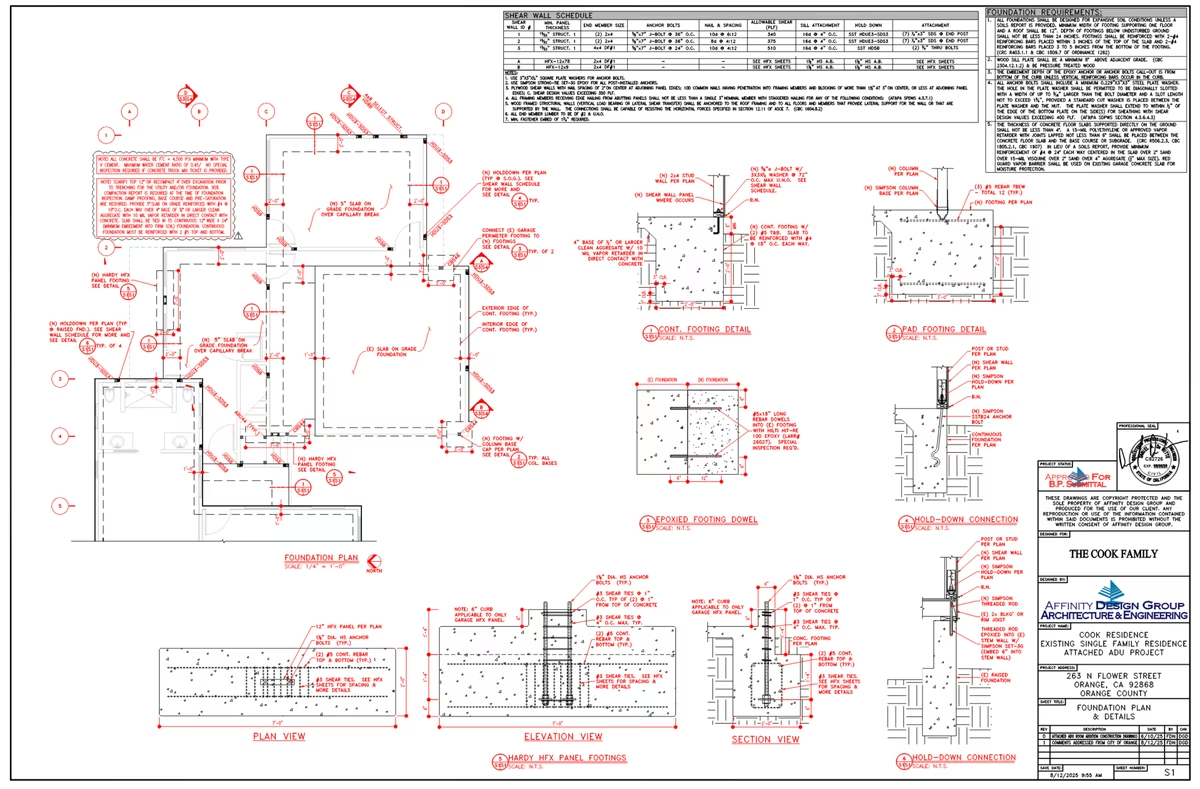
The PE stamp is a physical or digital seal that includes the engineer's name, their PE license number, the state that issued the license, the expiration date of the license, and the engineer's signature and date. In California, the stamp must also include the words "Professional Engineer" and the engineer's discipline (Civil or Structural). The stamp is applied to every page of the structural drawings and the cover page of the calculation package.
Why Building Departments Require a PE Stamp
California building departments require PE-stamped structural plans for one fundamental reason: professional accountability. The PE stamp represents a licensed professional's certification that the design is safe, code-compliant, and buildable. Without it, there is no professional standing behind the structural design.
Safety
California's seismic environment means structural design decisions have life-safety consequences. The PE stamp certifies that a qualified professional has analyzed the gravity, seismic, and wind loads specific to the project, designed every structural element to resist those loads with appropriate safety factors, verified that the design meets California Building Code and ASCE 7 requirements, and reviewed the drawings for constructability and completeness.
Legal Accountability
The stamping engineer is personally liable for the design. If a structural issue arises that can be traced to a design deficiency, the PE who stamped the plans is professionally and potentially legally responsible. This accountability is why the PE stamp carries weight — the engineer's career, reputation, and professional license are on the line with every stamp.
Code Compliance Verification
The California Building Code and ASCE 7 contain complex requirements that vary by building type, location, soil conditions, and occupancy. Applying these codes correctly requires engineering education, experience, and professional judgment. The PE stamp certifies that someone with the required qualifications has made these judgments for your specific project.
What the PE Stamp Covers
When a structural engineer stamps a set of plans, the stamp covers all structural elements shown on the drawings. For a typical residential project, this includes the foundation design including slab, footings, and anchor bolts, the framing system including walls, floor, roof, beams, columns, and headers, the lateral force-resisting system including shear walls, hold-downs, and drag struts, all connection details between structural elements, and the structural calculation package documenting the engineering analysis.
The stamp does not cover non-structural elements such as architectural design, MEP systems, finishes, or landscaping. It also does not cover elements designed by other professionals — if an architect designs the layout and a structural engineer designs the structure, each stamps only their own work.
PE Stamp vs Plan Review Stamp
There is an important distinction between an engineer who designs and stamps their own work versus a "plan review" or "plan check" service that stamps drawings prepared by someone else.
Design and Stamp (Preferred)
In this model, the PE performs the structural analysis, designs the structural systems, produces the drawings, reviews the final product, and stamps the completed set. The same engineer who did the analysis is the one whose license is on the drawings. This is the standard for quality structural engineering and the model that provides the most reliable results.
Review and Stamp (Less Reliable)
Some services produce structural drawings using drafters or unlicensed staff, then have a PE review and stamp the finished product. While this is legal in some circumstances, the review engineer may not have the same depth of understanding as the engineer who performed the original analysis. The quality of this model depends entirely on how thorough the reviewing PE's actual review is.
When hiring a structural engineer, ask directly: will the PE who stamps the plans be the same person who performs the analysis and produces the design? At Affinity, the answer is always yes.
What to Look For When Hiring a PE
Not every PE stamp is equal in terms of what it means for your project's success. Here are the factors that matter beyond just having a valid license.
Direct PE Access
Will you communicate directly with the licensed PE, or will your primary contact be a project manager, assistant, or junior engineer? Direct PE access means the person who understands your structural design at the deepest level is the person you can reach with questions during design and construction.
Response Time
How quickly does the PE respond to calls, emails, and texts? During construction, your GC may need a structural answer the same day. An engineer who takes 3 to 5 days to respond creates costly delays.
Drawing Detail
Are the PE-stamped drawings detailed enough that your framing crew can build from them without field clarifications? Vague drawings create RFIs, delays, and inspection failures. Ask to see a sample plan set before hiring.
Jurisdiction Knowledge
Does the PE know your city's specific plan check standards and preferences? An engineer who reviews drawings against your jurisdiction's known triggers before submission reduces correction risk significantly.
Construction Availability
Will the PE be available during construction for RFIs, field questions, and inspector issues? The stamp is not the end of the project — it is the beginning of the construction phase where engineering questions regularly arise.
How the PE Stamp Process Works at Affinity
At Affinity Design Group, every project follows the same process. Daniel De Witte, P.E. #82726, performs the structural analysis, designs the structural systems, reviews the drawings, and stamps the completed set. The same engineer from analysis to stamp to construction support.
Every drawing set is reviewed against your city's plan check standards before stamping and submission. This pre-submission review catches issues that would otherwise come back as plan check corrections — saving weeks on your permit timeline.
During construction, Daniel remains directly available for questions. The engineer who stamped your plans is the one your GC can call.
Common Questions About the PE Stamp
Does a PE stamp expire?
The stamp itself does not expire, but the PE's license must be current. If a PE's license lapses after stamping your plans, the stamp is still valid for the work that was completed while the license was active. However, if the plans need revisions, they must be re-stamped by a currently licensed PE.
Can I get a PE stamp from an out-of-state engineer?
No. In California, structural plans must be stamped by a PE licensed in the State of California. An out-of-state PE license is not valid for California building permits.
Can a contractor stamp structural plans?
No. Contractors are not licensed to design or stamp structural engineering work. Only a licensed Professional Engineer or, in some cases, a licensed Structural Engineer (SE) can stamp structural plans in California.
Is a PE stamp the same as an SE stamp?
In California, a Civil PE can stamp structural work on most residential and light commercial structures. An SE (Structural Engineer) license is required for hospitals, schools, and certain other essential facilities. For typical residential projects — ADUs, additions, wall removals, and inspections — a Civil PE stamp is the standard requirement.
Ready to Get Your Project Stamped?
Call (714) 215-7413 or submit a quick form for a same-day scope and firm quote. Daniel De Witte, P.E. #82726, handles every project from analysis through stamp through construction support.