Your City Wants More Than Structural Plans
First-time ADU owners in Orange County hit this surprise constantly: the building department does not accept structural plans alone. A permit-ready submission requires a complete plan set covering multiple professional disciplines. Missing a section means the city returns the application before they even start reviewing it. That gap adds 3 to 6 weeks before you can fix it and resubmit.
This guide breaks down every component of a complete ADU plan set — what you're paying for, what each section covers, and what the city's plan checker actually reviews.
The Three Disciplines in Every Complete Plan Set
Architectural Drawings
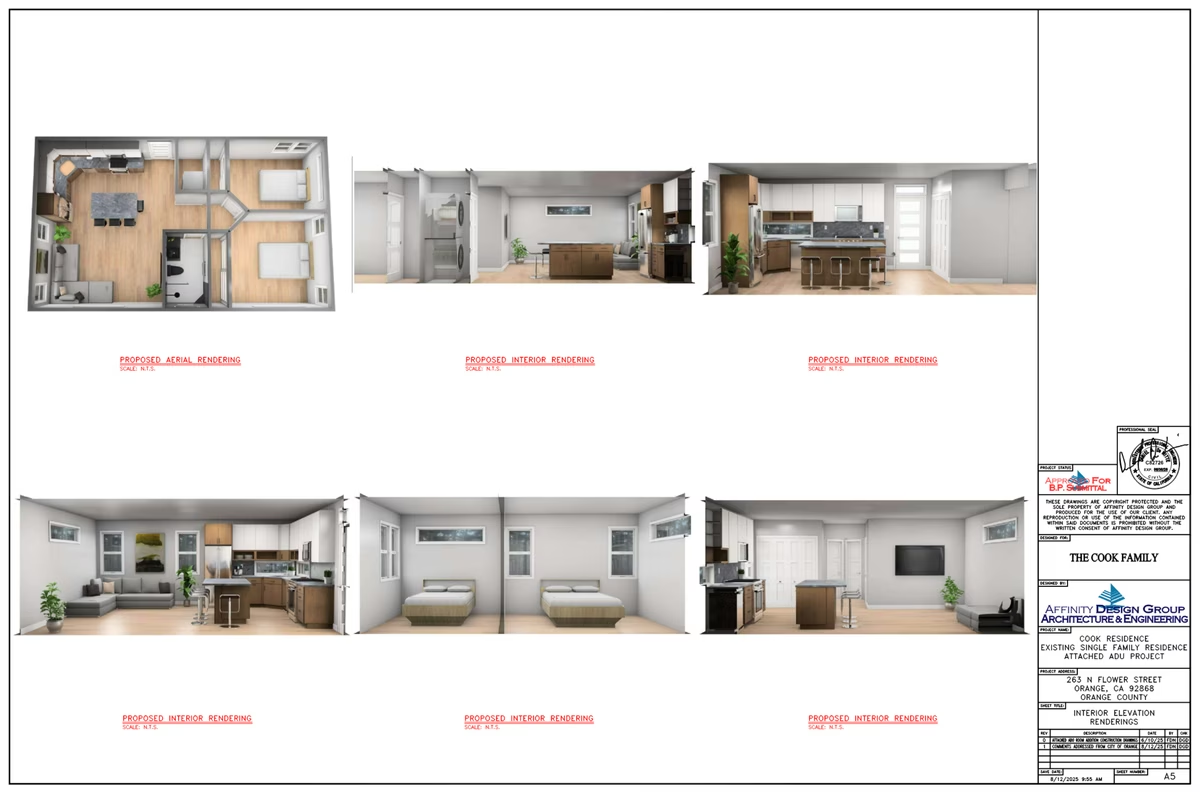
Architectural drawings define the design of your ADU. They include the existing site plan showing property lines, setbacks, and the main house. The proposed site plan shows where the ADU sits on the lot. Floor plans show the full interior layout. Exterior elevations show all four sides. Roof plans show slopes and drainage direction. Door and window schedules list every opening with dimensions and specifications.
For garage conversions, architectural drawings also document the existing garage conditions and show the proposed modifications to convert it to livable space.
Structural Engineering
California law requires PE-stamped structural plans for every ADU project. A licensed Professional Engineer designs the load-bearing system and stamps the plans.
The structural package covers foundation plans with footing locations, sizes, rebar schedules, and anchor bolt patterns. Framing plans show every wall, beam, joist, header, and connection. Lateral system design addresses shear walls, hold-downs, and the complete load path for earthquake and wind forces. The calculation package documents the engineering analysis — seismic loads, wind loads, gravity loads, beam sizing, and foundation capacity.
For garage conversions, the structural scope includes evaluating the existing slab to determine whether it supports residential loads or needs reinforcement.
MEP Engineering
MEP stands for mechanical, electrical, and plumbing. MEP drawings show the HVAC system layout, electrical panel sizing and circuit layout, and plumbing layout including supply lines, drain lines, vent stacks, and fixture locations.
In California, the MEP package also includes Title 24 energy compliance calculations. Title 24 requires every permitted project to demonstrate compliance with the state's energy efficiency standards — covering insulation values, window performance, HVAC efficiency, lighting power density, and water heating systems. Title 24 compliance is not optional.
What Coordinated Actually Means
In a coordinated plan set, all three disciplines are designed together. Structural beams align with the architectural floor plan. Plumbing does not route through a shear wall. The electrical panel location matches across every drawing sheet.
When three separate firms produce these drawings independently, coordination problems are common. The architectural floor plan shows a kitchen island in one spot. The structural plans show a beam directly above it. The MEP plumbing routes through a wall that structural designated as a shear panel. These conflicts remain hidden until the city's plan checker catches them — and sends everything back for corrections that add weeks to the timeline.
Affinity Design Group delivers all three disciplines as one coordinated package. One firm reviews all drawings for alignment before submission. One PE stamps the work. One point of contact handles questions during construction.
What the City Reviews During Plan Check
When your complete plan set reaches the plan checker, they review California Building Code conformance and local amendments, Title 24 energy compliance, zoning compliance including setbacks, height limits, lot coverage, and FAR, structural adequacy for current seismic and wind requirements, fire separation between the ADU and main dwelling, and accessibility requirements where applicable.
Each city in Orange County runs its own plan check process with its own timelines and correction triggers. Firms with jurisdiction-specific experience know what Anaheim's reviewers focus on versus what Irvine's reviewers flag — and format drawings accordingly. Affinity Design Group maintains jurisdiction-specific plan check knowledge across 20+ cities in Orange County and LA County.
How Many Sheets in a Typical ADU Plan Set
A complete ADU plan set typically runs 12 to 25 sheets depending on project complexity. A simple garage conversion sits on the shorter end. A two-story detached ADU with custom features pushes closer to 25 sheets.
The sheet count matters less than whether every required element is present and all three disciplines coordinate with each other. A 15-sheet set where everything aligns passes plan check faster than a 25-sheet set full of cross-discipline conflicts.
What Complete Plan Sets Cost
Affinity Design Group charges $5,000 to $14,000 for complete plan sets covering architecture, structural, and MEP for residential ADU and addition projects. Price depends on square footage, complexity, and number of stories. Complex multi-phase projects are quoted per project.
When comparing quotes from other firms, make sure you're comparing the same scope. A $2,000 quote for "structural plans" does not include architecture or MEP. You will need to hire and coordinate those separately, and the total cost often exceeds what a single firm charges for the complete coordinated package.
Ready to Start Your ADU?
Affinity Design Group delivers complete permitted plan sets — architecture, structural, and MEP — under one PE's oversight. Daniel De Witte, P.E. #82726, handles every project directly from scope through construction support.
Call (714) 215-7413 or request a quote. Written scope and firm fee within 24 hours.