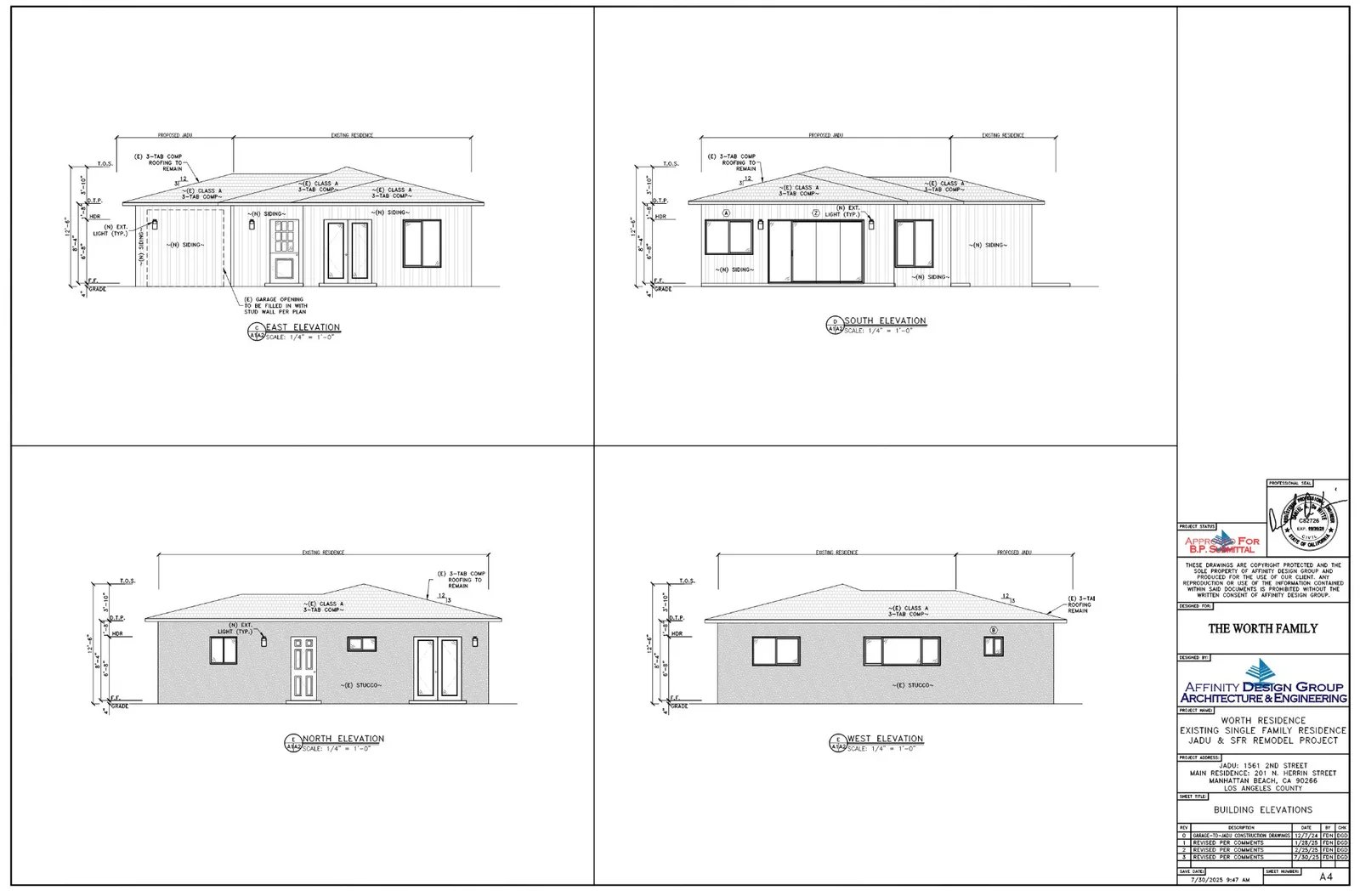
What Does a Structural Engineer Do for an ADU Project?
If you are building an ADU in Orange County or anywhere in California, a structural engineer is one of the first professionals you need to hire. California requires PE-stamped structural plans for every ADU permit — attached, detached, garage conversion, or JADU that involves structural modifications.
But what exactly does the structural engineer do? What do you get for the fee? And how does the structural engineering connect to the rest of your ADU project? This guide explains the structural engineer's role in detail so you know what to expect.
The Structural Engineer's Role in Your ADU
A structural engineer is responsible for designing the load-bearing system of your ADU — the parts of the building that keep it standing, resist earthquakes, and meet California Building Code safety requirements. This is different from the architect's role (who designs the layout, appearance, and spatial flow) and the MEP engineer's role (who designs the mechanical, electrical, and plumbing systems).
Think of it this way: the architect designs what the building looks like. The structural engineer designs what holds it up. Both are required for a complete ADU plan set.
Foundation Design
The foundation is the base that transfers all building loads to the ground. The structural engineer designs the foundation system based on the type of ADU you are building and the site conditions.
For New-Construction ADUs
The engineer designs a new foundation from scratch. In Orange County, most residential ADU foundations are slab-on-grade — a concrete slab poured directly on prepared soil with reinforcement and thickened edges at bearing walls. The engineer specifies the slab thickness, reinforcement size and spacing, thickened edge dimensions, anchor bolt locations, and any special requirements based on soil conditions.
If a soils report is available (some cities require one; others do not), the engineer incorporates the geotechnical recommendations into the foundation design. If no soils report exists, the engineer designs to conservative default values per the building code.
For Garage Conversions
The existing garage slab was designed for vehicle loads, not residential occupancy. The structural engineer evaluates the slab to determine whether it is adequate for the new use. This evaluation considers slab thickness (most residential garage slabs are 4 inches), reinforcement (many older garages have minimal or no reinforcement), condition (cracks, settling, moisture damage), and load-bearing capacity relative to the new residential loads.
In many cases, the existing slab is adequate without modification. This determination can save the homeowner $10,000 to $20,000 in unnecessary slab demolition and replacement. When the slab is not adequate, the engineer designs the minimum remediation needed — which might be a topping slab, localized reinforcement, or in rare cases, partial replacement.
Framing Design
The framing system is the skeleton of the building — walls, floor, and roof. The structural engineer designs every load-bearing element of this system.
Wall Framing
The engineer specifies wall stud sizes and spacing (typically 2x4 or 2x6 at 16 inches on center, but this varies based on loads and wall height), top plate sizes and connections, header sizes over every window, door, and opening (headers must be sized to carry the loads from above), and any special framing requirements at corners, intersections, and connection points.
Floor Framing
For two-story ADUs or ADUs with raised floors, the engineer designs the floor framing including joist sizes, spacing, and span direction, beam sizes where joists are not long enough to span the full distance, bearing point locations where floor loads transfer to walls below, and connection details between floor framing and wall framing.
Roof Framing
The roof framing design covers rafter or truss sizes and spacing, ridge beam or ridge board sizing, hip and valley rafter design if the roof geometry includes them, collar ties or ceiling joists that prevent the rafters from pushing the walls outward, and connections between roof framing and the top of the walls.
Every framing element is sized through engineering calculation — not rules of thumb or contractor experience. The calculation considers the specific loads (weight of materials, occupants, and seismic and wind forces) and the specific spans and configurations of your ADU design.
Lateral System Design
California sits on some of the most active seismic faults in the world. Every habitable structure must be designed to resist earthquake forces. The lateral force-resisting system is what keeps the building from racking, sliding, or collapsing during an earthquake.
What the Lateral System Includes
The structural engineer designs shear walls — wood-framed walls with structural sheathing (plywood or OSB) nailed in specific patterns that resist horizontal forces. The engineer specifies which walls are designated shear walls, the sheathing material, thickness, and nailing pattern for each wall, hold-down anchors at the ends of each shear wall that prevent the wall from lifting during seismic loading, anchor bolts that connect the bottom of each shear wall to the foundation, and drag struts and collectors that transfer lateral forces from the floor and roof diaphragms into the shear walls.
Why This Matters
The lateral system design is often the most complex part of the structural engineering for an ADU. It involves analyzing the seismic forces specific to your site (based on location, soil type, and building characteristics), distributing those forces to the shear walls in proportion to their stiffness, verifying that each shear wall can resist the forces assigned to it, and ensuring that the forces are properly collected and transferred through the diaphragms.
This analysis is performed per ASCE 7 (Minimum Design Loads and Associated Criteria for Buildings and Other Structures) and the California Building Code. It requires engineering software, code expertise, and professional judgment that goes well beyond what a contractor or drafter can provide.
Connection Details
Every structural element must be connected to the elements around it. The structural engineer designs all of these connections and specifies them on the drawings so the contractor knows exactly what hardware to install and how to install it.
Typical connection details in an ADU include beam-to-column connections using engineered connectors, joist hangers where floor or roof framing connects to beams, post bases where columns connect to the foundation, hold-down anchors embedded in the foundation and bolted to the shear wall framing, anchor bolts connecting the wall sill plates to the foundation, and straps and ties connecting wall-to-wall and wall-to-roof framing.
The connection details are often the most scrutinized part of the structural plans during plan check. They are also the elements most likely to be inspected in the field. Clear, detailed connection drawings reduce plan check corrections and make the contractor's job easier during construction.
PE Stamp and Calculation Package
The final deliverable from the structural engineer is a PE-stamped drawing set and a structural calculation package.
What the Drawing Set Includes
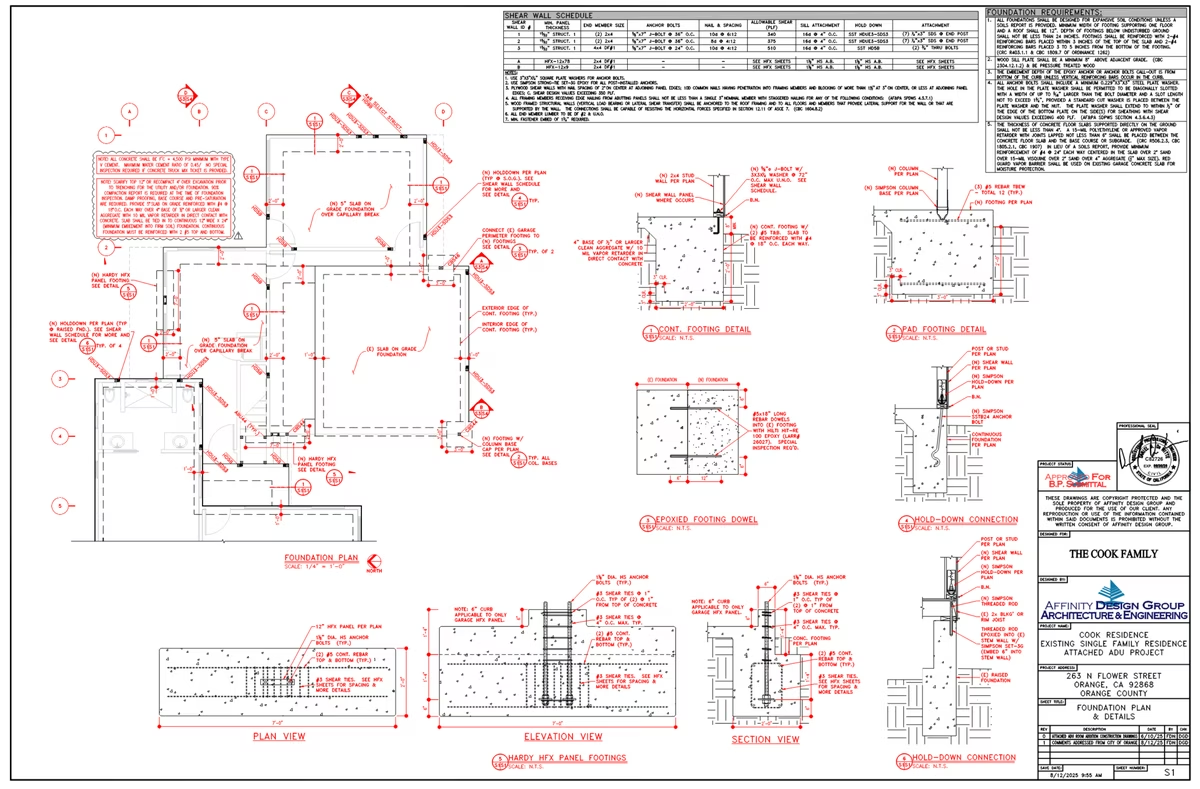
A complete structural drawing set for an ADU typically includes a foundation plan showing slab dimensions, reinforcement, thickened edges, anchor bolt locations, and any special details, a floor framing plan (for multi-level ADUs) showing joist layout, beam locations, and bearing points, a roof framing plan showing rafter or truss layout, ridge beam, and hip and valley details, a lateral system plan showing shear wall locations, nailing schedules, and hold-down locations, and detail sheets showing connection details, hardware specifications, and typical conditions.
What the Calculation Package Includes
The structural calculation package documents the engineering analysis behind every element on the drawings. It includes gravity load analysis (dead loads, live loads, and load combinations), seismic force analysis per ASCE 7 and the California Building Code, wind load analysis if applicable, individual member designs (beams, columns, studs, rafters), shear wall analysis including rigidity calculations and force distribution, and foundation design calculations.
The PE stamp on these documents means a licensed Professional Engineer has reviewed, approved, and taken personal professional responsibility for the design. This is the document that the building department requires to issue your permit.
Plan Check Review and Correction Support
Before the drawings are submitted to your city's building department, a good structural engineer reviews them against the specific jurisdiction's plan check standards. Every city has particular preferences, formatting requirements, and code interpretation tendencies. An engineer who knows your city's plan checkers and their expectations can address potential correction items before submission.
If the city does issue plan check corrections, the structural engineer reviews the comments, prepares revised drawings, and resubmits. At Affinity, corrections are turned around within 48 hours, and corrections due to our error are revised at no additional charge.
Construction-Phase Support
The structural engineer's involvement does not end when the plans are stamped. During construction, the engineer remains available for RFIs from the contractor when field conditions differ from the drawings, structural clarifications if the framing crew has questions about the plans, inspector support if the building inspector has questions about the structural design, and site visits when field verification is needed.
This construction-phase availability is what separates a complete engineering engagement from a stamp-and-disappear operation. At Affinity, construction support is included at every price point.
What Does ADU Structural Engineering Cost?
In Orange County, structural engineering for ADU projects typically ranges from $1,200 to $6,000 depending on the ADU type. Garage conversions run $1,200 to $2,500. Attached and detached new-construction ADUs run $2,500 to $6,000. The fee covers all of the deliverables described above — calculations, PE-stamped drawings, plan check review, correction support, and construction-phase availability.
Ready to Start Your ADU?
Call (714) 215-7413 or submit a quick form. We will scope your ADU project, tell you exactly what structural engineering you need, and have a firm quote to you within 24 hours.